
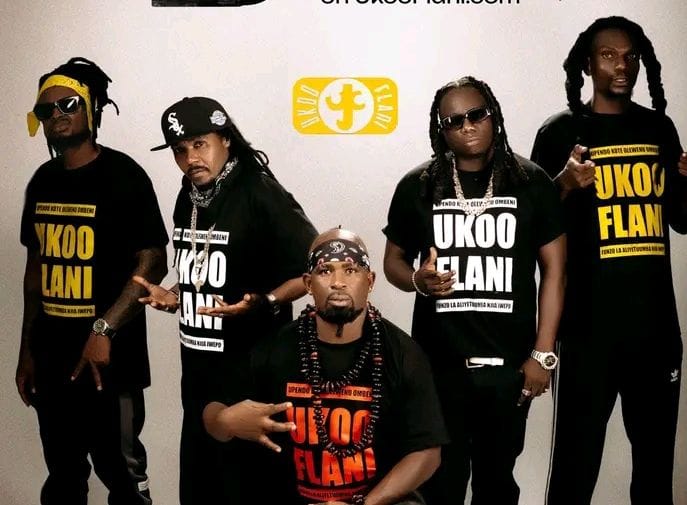
Ukoo Flani vs. Mau Mau: Unpacking the Roots of Kenyan Hip-Hop
To the casual listener, the names are synonymous with the golden age of Kenyan hip-hop. However, the history of Ukoo Flani Mau Mau is actually a tale of two cities—Nairobi and Mombasa—coming together to create a cultural revolution.
The Coastal Roots: Ukoo Flani
The name “Ukoo Flani” originally belonged to the coast. Based in Mombasa, specifically the neighborhoods of Magongo and Barsheba, this collective brought a distinct Swahili flavor to the genre. The name itself was a profound acronym: Upendo Kote Ole wenu Ombeni Funzo La Aliyetuumba Njia Iwepo. Artists like Sharama, Cannibal, and Fujo Makelele were the backbone of this movement, blending poetic Swahili with the raw realities of coastal life.
The Nairobi Force: Mau Mau
Parallel to the coast, the Mau Mau collective was rising in Dandora, Nairobi. This group was spearheaded by the legendary trio Kalamashaka (Kama, Johnny Vigeti, and Roba). Named after the Kenyan freedom fighters, Mau Mau was unapologetically political, addressing police brutality, poverty, and corruption. They were the pioneers who proved that Sheng could be a powerful tool for social change.
The Super-Group: Ukoo Flani Mau Mau
The “difference” vanished when these two powerhouses merged in the late 90s to form Ukoo Flani Mau Mau. This wasn’t just a collaboration; it was a “conglomerate.” By uniting the coastal lyricism of Ukoo Flani with the gritty, urban street-knowledge of Mau Mau, they created an unstoppable force. This union was solidified by the iconic “Dandora Burning” album, featuring over 20 MCs.
While Ukoo Flani was the family and Mau Mau was the ideology, together they became the blueprint for conscious African hip-hop. Understanding this distinction isn’t just about trivia; it’s about honoring the geography of a movement that united a nation through rhyme.