

Doing Her Thing: Fena Gitu’s Bold Women-Only Show That Could Redefine Kenya’s Live Scene
Fena Gitu is once again positioning herself at the intersection of culture, conversation, and disruption. Her upcoming event, Doing Her Thing, set for Sunday at The Social House, is not just another live performance—it’s a deliberate statement. Borrowing its name and spirit from one of her most recognizable records, the show is built around an all-female lineup and, more notably, a women-only audience policy for the main event.
At face value, this is a bold celebration of female artistry and safe spaces. In an industry—and a live events scene—that is still largely male-dominated, curating a lineup where women are not just included but centered is significant. It creates an ecosystem where female performers can express themselves freely, and female fans can engage without the often unspoken social pressures that come with mixed-gender environments. For many, this will feel like a long-overdue recalibration of space and power dynamics within Kenyan entertainment.
But beyond the symbolism, there’s a strategic edge here. Fena understands branding, and this event sharpens her identity as an artist who doesn’t just make music but drives narratives. “Doing Her Thing” becomes more than a song—it evolves into a lived experience. That kind of experiential branding is what separates artists who trend from those who endure.
Still, for the Kenyan audience, this move may come off as slightly radical—if not outright controversial. A women-only main event challenges deeply ingrained social norms around inclusivity and public gatherings. Kenya’s entertainment culture thrives on communal experiences, and excluding a segment—especially men, who make up a large portion of concert-going audiences—could be perceived as divisive. The immediate online reactions already hint at this tension: admiration on one side, skepticism on the other.
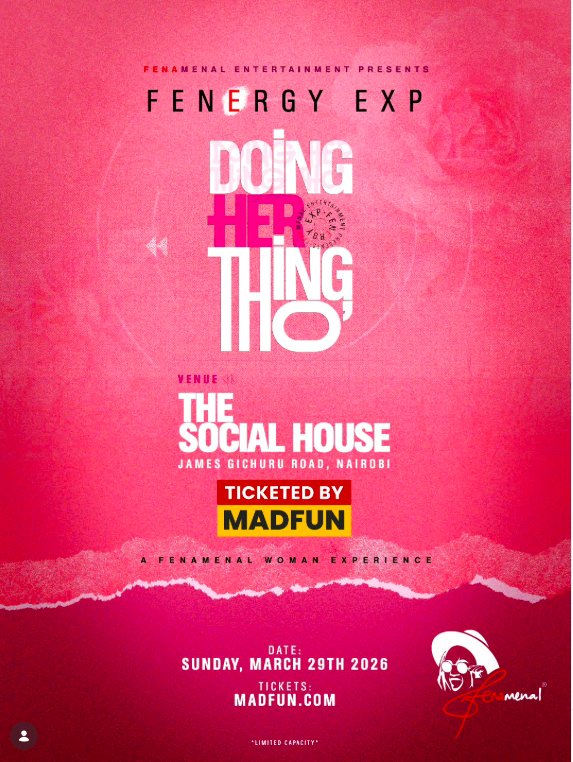
However, the inclusion of an all-access afterparty cleverly balances the equation. It signals that the intent isn’t outright exclusion, but rather the creation of a protected primary space before opening up the celebration to everyone. It’s a layered approach—one that acknowledges both the need for safe spaces and the value of shared experiences.
Ultimately, this event could be a game changer. If successful, it may inspire more curated, purpose-driven events in Kenya’s live scene. At the same time, it pushes audiences to confront their own expectations around access, gender, and entertainment. Whether you see it as empowering or “wild,” one thing is certain—Fena Gitu has people talking, and in today’s attention economy, that’s half the victory.